
Prof. Maurizio Tira
University of Brescia, Italy
Urban and regional Planning
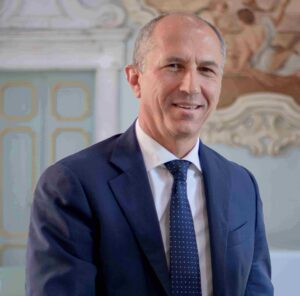
Maurizio Tira is Full Professor of Urban and regional Planning at the University of Brescia, where he served as Rector from 2016 to 2022. He teaches Urban planning and risk mitigation in the master’s degree course in Civil and Environmental Engineering. He is a member of the Doctoral Council in Civil and Environmental Engineering, International Cooperation and Mathematics and of the Italian PhD Course in Sustainable Development and Climate Change. His educational expertise extends to academic governance and doctoral training at national and international levels.
As Past-President of the Italian Society of Urban Planners, he is member of the Board of the Academy of Science, Letters and Arts in Brescia and Corresponding Member of the Academy of Science of Bologna and the Academy of Science of Region Lombardy. He is member of the board of the European University Association (EUA), with a portfolio on sustainability and greening, and of the Governing Council of the Magna Charta Observatory.
He acts as President of the Consortium GARR, “The ultra-broadband network dedicated to the Italian research and education community”. Paul Harris Prize, in 2017, in December 2020 he has been appointed Commander of the Order of Merit of the Italian Republic.
Sustaining Sustainable Development: The Role of European Universities
Over the last decade, universities across Europe have been increasingly engaged with sustainability-related topics. Universities have considered themselves as key actors, acknowledging their social responsibility to drive the change within and beyond their campuses. With the United Nations Agenda 2030 rapidly approaching, critical questions emerge: what can be expected and anticipated for the future of sustainability for the coming decade? How can universities contribute to a new agenda? How can universities contribute to co-creation of a common vision on sustainability?
Sustainable development needs to be sustained facing the rapid changes in policies, both at EU level and worldwide, being aware that we do not have an alternative to the change of paradigm!
Prof. Dr. Mihály Boros
Institute for Surgical Research, University of Szeged, Hungary
Innovations in Experimental Surgery and Microcirculatory Research
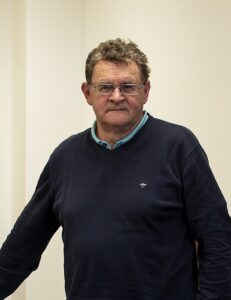
Mihály Boros (b. 1959) is Professor of Surgery at the University of Szeged, Hungary, where he earned his M.D. (1983) and completed surgical board certification (1987). Following research fellowships in Osaka and Munich (1992–1996), he pioneered intravital microscopy applications in experimental pathology, focusing on microcirculatory and mitochondrial mechanisms in gastrointestinal diseases, hypoxia, and sepsis. He holds a Ph.D. (1992) and D.Sc. (2003) from the Hungarian Academy of Sciences. His 460+ cumulative impact factor includes publications in Nature Medicine, Gastroenterology, and Critical Care Medicine, with over 6,000 citations (H-index: 42).
As Director of the Institute of Surgical Research (1997–2024), Prof. Boros held key academic leadership positions including Vice-Dean for Postgraduate Studies, Chair of the Education Committee, and Chair of the Students’ Scientific Council. He is a founding member and subprogram leader of the Doctoral School of Multidisciplinary Medical Sciences, having supervised 47 Ph.D. graduates. As founder-director of the Skills Centre (2013–2025), he coordinated national graduate and postgraduate skills training and authored multiple textbooks. His educational expertise extends internationally as a Hungarian Accreditation Committee member, WFME accreditation expert across six countries, and external faculty at Lund University.
He served as President of the European Society for Surgical Research (2005–2006), Secretary General of the Hungarian Society for Physiology (2014–2018), and Senior Associate Editor of Shock Journal. His honors include the Howard Hughes International Research Scholar Award (1995), European Society for Surgical Research Lifetime Recognition Award (2014), and Hungary’s Officer’s Cross of Merit (2023).
Simulation Skills Training as a Prerequisite for Sustained Growth in Medical Education
Simulation-based medical education employs diverse technologies and methods to enhance learning for individuals and therapeutic teams. This presentation examines two innovative components that exemplify effective practice in contemporary medical pedagogy.
First, microsurgery training programs at Hungarian universities demonstrate how strategic investment in specialized workstations and training microscopes can address the logistical challenges of maintaining traditional master-apprentice relationships in modern education. Introduced initially at postgraduate and later undergraduate levels, these programs enable objective performance assessment while preserving essential mentorship bonds even within large study groups. Evidence indicates this approach significantly improves medical training quality and provides strong foundations for surgical residencies, with benefits extending to multiple clinical areas and ultimately enhancing patient care.
Second, the “Skills Race” competition initiated by the University of Pécs Medical Faculty illustrates how competitive frameworks advance simulation-based training. Medical student teams tackle predictable and unexpected clinical scenarios, fostering inter-institutional cooperation while driving performance standards upward.
These examples underscore that effective simulation training requires appropriate institutional infrastructure and strategic implementation. The presentation argues that continuous improvement—striving to surpass previous achievements—constitutes the essence of best practice in medical education, ensuring sustained growth in healthcare professional development.
Professor Dr. Nikoloz Parjanadze
Vice-Rector for International Relations, European University, Georgia
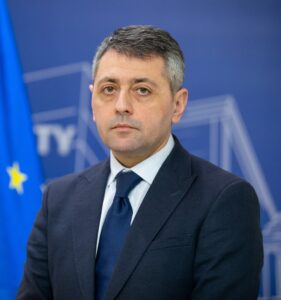
Nikoloz Parjanadze is a researcher, educator and administrator at European University specializing in educational leadership, higher education quality assurance, and internationalization.
He has developed expertise in educational management through professional experience at both national and institutional levels, including work at Georgia’s National Center for Educational Quality Enhancement and his current role overseeing international relations at European University. His administrative experience has provided deep insights into young adults’ and adults’ evolving needs in higher education, particularly career readiness and lifelong learning integration, informing his approach to curriculum development and student support services.
His experience includes developing and evaluating quality assurance frameworks for higher education institutions and programs, as well as teaching and research supervision. As a Chevening Scholar at UCL Institute of Education and Fulbright Visiting Scholar at the University of Arkansas, he has engaged with international perspectives on educational leadership and higher education internationalization. His scholarly work encompasses educational policy and institutional management, with publications connecting research to practical applications in educational administration and leadership development.
Beyond the Algorithm: Reclaiming Higher Education as Public Good in the Age of Artificial Intelligence
This keynote, first and foremost, addresses an eternal question: Is education a public good or commodity? Even though the concept of education as commodity seems to have been rejected by academia, but heavily supported by business, and even governments, the question has returned with urgency now hanging like a sword of Damocles over the entire academia and public. Accordingly, the keynote observes the critical crossroads facing higher education as artificial intelligence transforms pedagogy, research and education governance. It provides arguments to resist AI-driven commodification of knowledge; however, it does present a clear vision that resistance cannot neglect technology’s potential for genuine learning. The keynote provides three foci: academic freedom versus algorithmic control, public good versus marketisation-commodification, egalitarianism versus elitism. Even more, it touches upon the European legislation and regulations on AI, discusses legal uncertainty in case of Georgia and addresses fundamental questions of democratic citizenship and human development. It also emphasizes the urgency of AI integration policies in higher education context both at national and international levels in the context of education policy and pedagogy. Rather than doubting whether AI should be adopted, it defines the importance of collective determination of what educational values AI should serve.